News & Insights

Commentary, firm news, and media features from our team.

Filters

  • All Publication Types
  • Article (35)
  • Firm News (2)
  • All People
  • Bryan Gelman (2)
  • Tom McElroy (1)
  • Service
  • Corporate Restructuring & Insolvency (1)
  • Client Focus
  • Businesses, Owners & Executives (1)
Mockups of Albert Gelman new website

Albert Gelman Inc. has introduced a new brand identity and website designed to better reflect the firm we are today and support the clients, referral partners, and professionals we work with. Since we started, Albert Gelman Inc. has grown in our team, capabilities, and the complexity of the mandates we take on. Today, our work extends across corporate restructuring and insolvency, lender and creditor services, individual proposals and bankruptcy, dispute resolution and litigation support, forensic and investigative accounting, and court-appointed engagements. We work with business owners, organizations, lenders and secured creditors, individuals, lawyers, accountants, and other stakeholders who often require…


downtown-toronto-city-skyline-cityscape-canada

In February 2026, Albert Gelman Inc. (AGI) proudly marks 15 years of delivering professional, ethical, and comprehensive insolvency and restructuring services to individuals, businesses, and financial institutions. Since its founding, AGI has remained committed to guiding clients through financial challenges with integrity, respect, and a deep understanding of the human realities behind every matter. Over the past 15 years, AGI has earned its reputation as a trusted insolvency partner by combining seasoned expertise with a client-focused approach. The firm’s experienced, multidisciplinary team delivers high-calibre guidance with clarity, care, and efficiency—bringing big-firm capability without unnecessary bureaucracy or cost. This commitment to…

canadian-embassy-london-with-many-canadian-flags

The Canadian real estate market is experiencing increased financial strain, with a rise in distressed residential and commercial projects. In a recent Green Street News feature, Bryan Gelman, President and Co-Founder of Albert Gelman Inc., outlines how licensed insolvency trustees play a critical role in stabilizing troubled developments, safeguarding lenders, and ensuring projects can move forward efficiently. The article highlights the key steps involved in restructuring distressed properties, demonstrates why receivership does not necessarily signal the end of a project, and offers insights into emerging trends in the market. For real estate developers, lenders, and investors, it provides a practical…

Dispute and Stakeholder Advisory_iStock-1462983023

Directors of corporations can be held personally liable for the unremitted HST and payroll deductions owing by those corporation to the Canada Revenue Agency (“CRA”). However, when a corporation files for bankruptcy, the CRA is required to undertake certain steps in order to assess the director(s) of the bankrupt corporation for unpaid HST and/or source deductions. In accordance with section 227.1(2)(c) of the Income Tax Act (Canada) and section 323 of the Excise Tax Act (Canada) where a corporation files for bankruptcy, the CRA must file a proof of claim with the Trustee within six months of the date of…

hand-holding-credit-card-makes-purchase-internet-laptop-computer-with-credit-card-online-payment-shopping-online-ecommerce-internet-banking-spending-money-concept

Often times an investigation into the financial affairs of an individual or business that is suspected to have been involved in a financial fraud is impeded by the inability of the aggrieved party to obtain the necessary documents, records and other information needed to prove its claim of fraud. Further, even when the aggrieved party has obtained a judgment against the defendant it may prove difficult to ultimately collect on the judgement. The provisions of the Bankruptcy and Insolvency Act (the "BIA") provide a Trustee in Bankruptcy with significant powers to investigate individuals or businesses (herein after referred to as…

corporate-taskforce-formulating-crisis-management-plan

A consumer proposal is a legislative tool that individuals can use to consolidate and reduce the amount of their debts without filing for bankruptcy. For individuals, debt consolidation legislation is governed by the Bankruptcy and Insolvency Act (the "BIA"). Essentially, the BIA allows an individual who can't manage their existing debt load to make a proposal to his/her creditors to pay back a certain portion of what they owe. The repayment plan must be completed within 5 years of filing the consumer proposal. Ultimately, it is up to the creditors of the individual making the consumer proposal to approve the…

Insolvency Proposals and Bankruptcy_iStock-2221694395

Often, when a business is facing financial difficulties it is hampered by unprofitable supply agreements or expensive service contracts. Any business that is using the Bankruptcy and Insolvency Act (the “BIA”) to make a proposal to its creditors may utilize certain provisions of the BIA to allow for the termination of contracts or agreements that are not profitable , without penalty, thereby improving its chances of successfully restructuring its financial affairs. The BIA was written in such a way as to provide company’s with the tools they need to successfully make proposals to their creditors and continue operating. The BIA…

exhausted-businessman-resting-with-eyes-closed-his-office-desk-while-feeling-tired-work

Some businesses reach a point in their life cycle when they are saddled with debt and there simply isn’t enough cash to go around. Some of these businesses are able to generate enough cash to work with their creditors to get through the cash crunch. Unfortunately, others are not. There are many reasons why a business could find itself in a financial conundrum including, the protracted illness of a key employee, a drastic shift in economic factors beyond the control of the business such as a sharp increase or decrease in the Canadian dollar, a Canada Revenue Agency reassessment, theft…

serious-mature-hispanic-man-man-checking-home-finance-calculating-money

It is no secret that the Canada Revenue Agency (“CRA”) has tremendous legislative power to pursue businesses and individuals who are in arrears of their tax obligations. These powers include, among other things, the ability to freeze and garnish funds in bank accounts, garnish accounts receivable owing from customers and, with respect to an individual, garnish wages. In our practice, we have seen an undeniable increase in the number of businesses and individuals affected by CRA garnishments. Often times, when CRA wields their powers, the business or individual is already in financial difficulty, and this is why they have fallen…

Dispute Resolution and Litigation Support_iStock-2278633772

Your client calls you and indicates that they have tirelessly attempted to collect a substantial debt owing to them. Emails, phone calls and letters demanding payment have not resulted in any collection. In these situations where the debt is owing, but payment hasn’t been made, a litigation lawyer may recommend that its client commence an application for a bankruptcy order against the debtor that owes them the money. If the Order is granted the Court will adjudge an individual or corporation bankrupt. At that time, a Licensed Insolvency Trustee will be appointed as the trustee of the bankruptcy estate and…

fragment-modern-residential-apartment-flat-buildings-exterior-detail-new-luxury-house-home-complex-part-city-real-estate-property-condo-architecture-copy-space-blue-sky

For lawyers who do not practice regularity in bankruptcy and insolvency matters, with the next few email updates we hope to shed light on a few of the interesting provisions in the Bankruptcy and Insolvency Act (“ BIA ”) that are used quite regularly by the Insolvency Bar but may be unfamiliar to those practicing in other areas. The first section we wish to discuss is BIA section 38. Essentially, section 38 allows a creditor to realize on an asset, whether it be a pre-bankruptcy preferential payment or transfer or other chose in action or ongoing litigation for which the…

Lender and Creditor_iStock-1137841636

Some businesses reach a point in their life cycle when they are saddled with debt and there simply is not enough cash to go around. Some of these businesses are able to generate enough cash to work with their creditors to get through the cash crunch. Unfortunately, others are not. There are many reasons why a business could find itself in a financial conundrum including, the protracted illness of a key employee, a drastic shift in economic factors beyond the control of the business such as a sharp increase or decrease in the Canadian dollar, a Canada Revenue Agency reassessment,…

thoughtful-business-executives-examining-report

The Bankruptcy and Insolvency Act (Canada) (“Act”) at subsection 14 allows the creditor(s) of a bankrupt estate, whether it be in respect of a bankrupt individual or corporation, to substitute the Trustee chosen by the bankrupt for a Trustee of their choosing. This substitution usually takes place at the meeting of creditors which occurs within 21 days of the date of bankruptcy and the following conditions must be met in order to substitute the original Trustee: the creditor(s) present at the meeting, either by proxy or in person, must obtain a special resolution of the creditors to replace the original…

GROUP-~1

Generally speaking, individuals and corporations are able to sell or transfer their property to anyone without concern. However, there are times when a transferor cannot do whatever he or she would like to do with his or her property including, giving it away, according to the Income Tax Act (Canada). According to section 160 of the ITA, receiving property from someone can result in significant and unexpected consequences to the recipient if: (a) the Transferor is indebted to the CRA; (b) the Transferor and Transferee are related; and (c) the transferee did not provide the transferor with fair market value…

Corporate Restructuring_iStock-2251667694

Tax lawyers and accountants know well that often times individuals and businesses are required to object, appeal or request relief in order to correct an error made by the Canada Revenue Agency (“CRA”) and/or to reduce interest and penalties which were assessed unfairly or inappropriately. Unfortunately, these processes can take time to work their way through the CRA and, in the meantime, the CRA, depending on the circumstance and type of debt, is free to pursue its enforcement activities (i.e. wage garnishments, registration of liens on real property, enhanced garnishments sent to customers, etc.). One tool in the tax lawyer/accountants…

man-reading-paperwork-office-with-laptop-financial-statement-budget-proposal-report-mature-person-glasses-document-with-computer-finance-management-planning-review

In Canada, the directors of a corporation may be the subject of significant personal liability in the event that the corporation becomes insolvent and cannot repay all of its creditors. One of the most common creditors to assess the corporation’s directors is the Canada Revenue Agency (“CRA”). Directors of corporation in Canada may be assessed personally by the CRA in the event that the corporation is not able to pay its HST and/or payroll source deductions liabilities. The director assessment usually renders the director personally insolvent and can have significant implications on their personal financial situation. So, why not make…

downtown-toronto-city-skyline-twilight-ontario-canada (1)

Licensed Insolvency Trustees have a wealth of experience and expertise in helping business owners get through turbulent times. As professional advisors, we must leverage that experience and expertise to assist businesses negatively affected by COVID-19. Our goals should be to help them remain solvent and/or return solvency, help them preserve their core strengths and help them maintain or even grow the value of their businesses. The following are the key areas of action that we believe business owners should focus on while navigating through the COVID-19 crisis. If you wish to discuss please call either Joe Albert or Bryan Gelman.…

caucasian-young-man-female-colleague-attending-business-meeting

The Canada Revenue Agency (CRA) has continued to make massive improvements in the area of income tax debt collection, and is showing no signs of slowing down. Methods traditionally reserved for extreme cases, such as wage garnishments, liens, and the invoking of other sections of the Income Tax Act (ITA) are quickly becoming standard procedure. It is quite clear that the Trudeau government has identified significant gaps in the income tax debt collection practices of the CRA, and through their substantial investment (approximately $300 million), are anxious to close these gaps as quickly as possible. Many income tax professionals are…

SAD-DE~1

Many accountants and lawyers encounter clients who, despite their best efforts to make a business thrive and be successful, take on too much debt and must consider insolvency proceedings. At times the biggest challenge when facing these scenarios is determining the best initial steps to take in order to maximize Canadian regulations that can protect clients from “worst case scenarios”. It is with this in mind that I have chosen to focus this week’s blog on the first steps that lawyers or accountants can recommend to their client in order to best prepare for insolvency proceedings. It’s a Process… The…

senior-business-executives-reviewing-documents-oil-industry-meeting

A common feeling amongst many professionals, business owners, and self-employed individuals is the nervous sensation that accompanies any type of letter from the Canada Revenue Agency (CRA). Generally speaking, it doesn’t matter what the letter says, nervousness accompanies anything that arrives from the CRA and people have a tendency to be scared of what is inside. As part of Prime Minister Trudeau’s new budget, the Federal government has made it clear they plan to enforce what they call Tax Fairness: “As a matter of fairness for all taxpayers, the Government is committed to preventing underground economic activity, tax evasion and…

Forensic and Investigative Accounting_iStock-1155347271

The Canadian Revenue Agency (CRA) has made it clear that they plan to get much better at collecting outstanding tax debts over the next 5 years, which means Canadians who aren’t current or compliant with their tax payments need to be on notice. But with that said, what can we actually expect from the Liberal Government over the next 5 years as it relates to tax debt? Well, here’s what I can tell you: According to Budget 2016, which can be viewed here , the Government “is committed to preventing underground economic activity, tax evasion and aggressive tax planning. Budget…

serious-mature-hispanic-man-man-checking-home-finance-calculating-money

Over the course of the next decade one of the largest wealth transfers in Canadian history will take place as Baby Boomers pass down their wealth to their children and grandchildren. You will likely have some friends and family who will benefit from this wealth transfer; however, as assets and cash are passed down the Canadian Revenue Agency (CRA) has an entitlement to their fair share of tax – and we need to be aware of the responsibilities that are owed to the CRA in the case of an inheritance. As a Licensed Insolvency Trustee I come across inheritance situations…

modern-executive-office-with-panoramic-city-skyline-vibrant-autumn-park-view-through-floor-ceiling-windows

Nobody want to declare bankruptcy, aside from the toll it will take in an individual's credit score the mental impact can be staggering to anybody. That said, and given the impact that bankruptcy can have on people, this week's blog offers up some helpful tips that can serve as advice to help you or your clients stay away from the dreaded "B" word. Below are 4 quick actions that anybody can take to start down the road to avoiding insolvency and getting their financial life back in order. Sell your assets Often a quick way to generate some cash is…

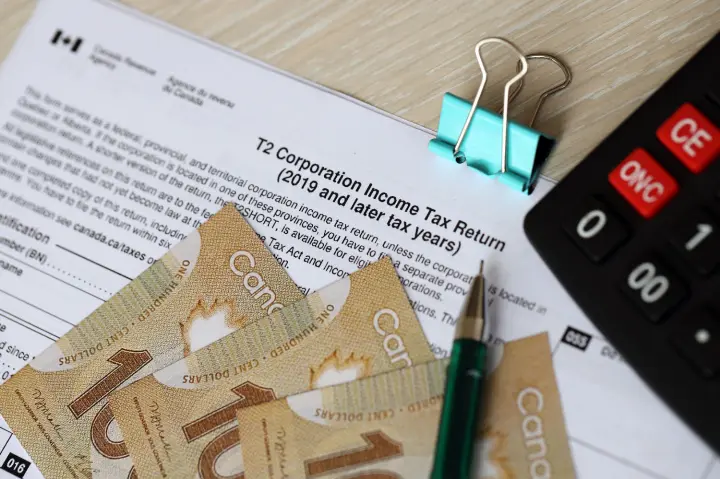
canadian-t-tax-form-corporation-income-tax-return-lies-table-with-canadian-money-bills-close-up

Over the course of several months I have taken the opportunity this blog provides to explain some of the Canadian Revenue Agency (CRA) activities being undertaken to reduce Canadian tax evasion and ensure that everybody is paying their fair share to the Government. One of the key areas of focus for the CRA is in the area of offshore tax havens, and there is good reason for this activity What is driving the collection push? If I told you that since 2010 the CRA has been able to collect over $13.4 million in fines for offshore tax evasion would you…